Can carbon emissions become the building blocks of clean energy? Astracite, a cleantech startup born in Carbon13’s Berlin Cohort 3, believes they can—and they’re proving it.
The Flemish venture has just secured €50,000 in funding from a BAN Flanders business angel, marking a key milestone in its mission to revolutionize battery materials. Astracite is developing a high-performance anode material for lithium-ion batteries, made from captured CO₂ emissions and recycled batteries. In a market dominated by Chinese graphite—and recently disrupted by Chinese export restrictions—Astracite is positioning itself as a European frontrunner in sustainable battery innovation.
“We aim to establish a European supply chain for high-performing battery material by turning CO₂ into powerful, sustainable materials. This is how we make climate impact tangible.”
A New Kind of Battery Material, Born from Waste
Astracite’s “green graphite” is designed to outperform conventional synthetic graphite, offering over 5x higher capacity, long cycle life, and competitive pricing. Their technology combines advanced materials science with cleantech innovation, and is built to scale. By using waste CO₂ and recycled batteries, Astracite not only reduces environmental impact but also strengthens Europe’s technological sovereignty in a critical supply chain.
Fueling the Next Phase
The €50K investment in combination with Carbon13’s investment will enable Astracite to scale up lab-scale production and accelerate R&D. Beyond capital, the business angel brings industrial expertise and network access, both essential for Astracite’s roadmap toward commercial production by 2032.
Astracite is a great example of how Carbon13 ventures are turning climate challenges into scalable solutions. We’re proud to support their journey toward a cleaner, more resilient energy future.
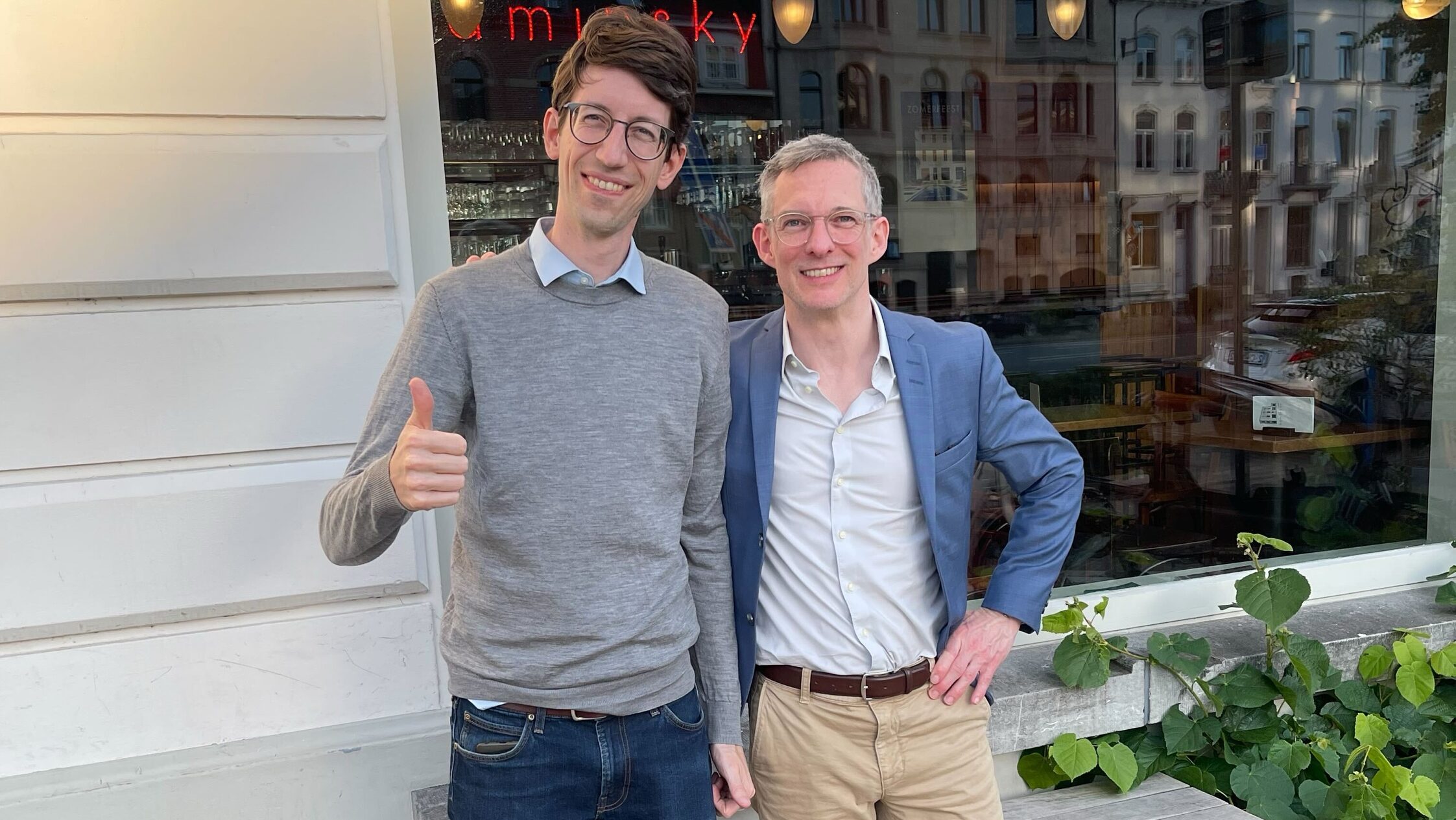
Astracite’s founders Sander Arnout and Christian Fink.