What are Domain Experts and how do they support?
Domain Experts are our closest circle of supporters. From Phase 2 onwards they are mentors and sparring partners for our teams and bring a wealth of experience from entrepreneurship and technical understanding. We would like to introduce you to them.
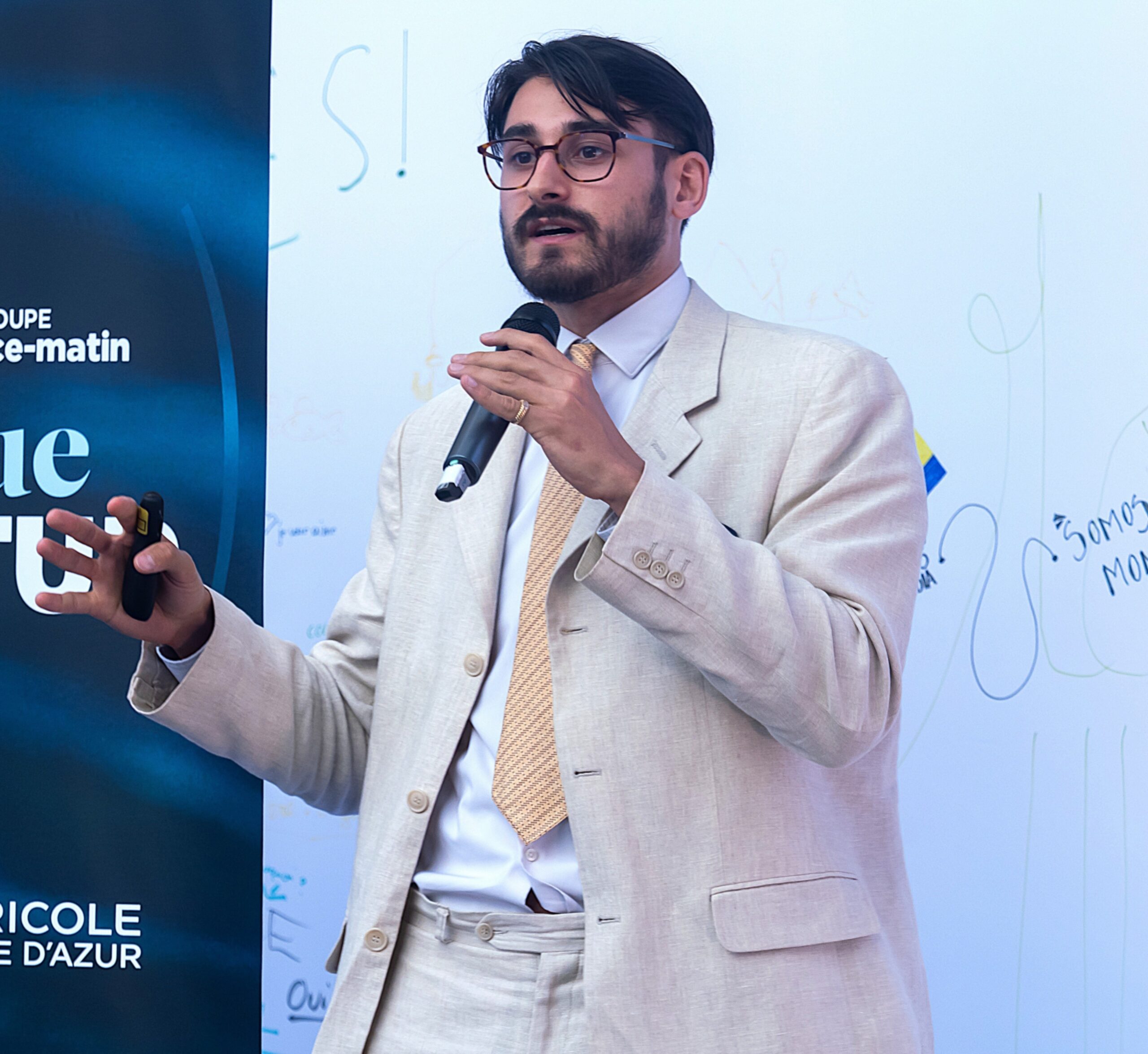
Meet Thibaut Monfort Micheo, Forbes 30 Under 30 recipient and former CTO of FlexSea, where he raised £4M across equity and grants, and scaled a deep-tech biotech startup from early development in his kitchen to industrial operations in a 700sq.m factory while leading a 15-person team.
After stepping away from FlexSea in 2024, he now supports founders, drawing on firsthand experience of going from “0 to 1” and “1 to 10”. With an MEng in Materials Engineering from Imperial College and deep expertise in ocean-tech, biomaterials and biotechnology, he combines technical knowledge with real-world startup experience to empower the next generation of entrepreneurs. He now works as a consultant for early-stage deep-tech and climate companies, as a startup scout, and as Content Lead at PitchDeckCreators, where he works daily on what makes a fundraising story land with investors.
“Come to peace with the fact that most of the advice you receive won’t land the same way the first time you hear it as it will once you’ve lived it. That gap is not a failure of communication; it’s just how experience works.”
Want to think like Thibaut? Step into his mindset, and see the world through his lens? Look at our recent connection with him.
What made you join Carbon13’s mission to fight the climate emergency by supporting climate tech projects?
When you’re new to anything, the thing you want most is someone who has already been through it to tell you how things clicked for them. Not polished advice from a distance; the real stuff, including the mistakes. You want someone to give you a genuine head start, share their network, and say “here’s what I wish I’d known at your stage.”
That’s exactly what I want to be for founders now. Climate has always been at the core of what I do, professionally and personally. Carbon13 was already a long-time partner during my time at FlexSea; a relationship that grew into something closer to friendship. This feels like the natural next chapter: giving back to a community that gave a lot to me.
What is the difference when it comes to supporting and working with climate tech founders, compared to other founders?
The industry is full of sharks, opportunists, and bull****.
Greenwashing is everywhere, and it creates a poisonous dynamic: investors who have been burned by vague impact narratives become more risk-averse, which makes it harder for the companies doing real, evidence-based work to get heard.
So the first thing I tell climate founders is: stay level-headed and stay close to scientific truth, even when it’s less attractive than the story your competitors are telling. Credibility is a compounding asset in this space. Hype is a debt you’ll have to repay.
The other challenge specific to this sector is structural: climate companies are disproportionately hardware-heavy and long-timeline by nature. That’s a hard sell to a VC fund with a 10-year cycle that’s already halfway through it. The founders who navigate this well aren’t the ones who minimise the timeline; they’re the ones who can show exactly what the next 18 months prove, why that makes the next raise inevitable, and how each milestone de-risks the overall bet. That’s a craft, and it’s one I’d genuinely love to help people develop.
Carbon13 is about building sustainable startups and about building strong teams, are there any examples of teams that have impressed you?
It’s hard to pick one when you’ve been in the trenches with so many. Over the past year I’ve worked with more than 15 companies inside the Carbon13 venture builder, helping them sharpen their pitch, structure their fundraising narrative, and get in front of investors.
For instance, with Rongbient Biotech, we won the Monaco Ocean Protection Challenge together in 2025 and they are now scaling their production of seaweed products thanks to Carbon13’s and other investors.
Beyond that, the range of companies I’ve had the chance to support inside the cohort has been remarkable: Propel & Power, Gradient Dynamics, Terasort AI, Scarecrow Intelligence, Composite Designers, Cooloop, among others. The underlying problems are the same: telling a coherent story under pressure, building a financial projection that is coherent with your GTM & revenue model, and knowing which investor conversations to prioritise and when. However, I have never met a team who didn’t play the game and this allows fast iteration and progression.
Building a start-up is a rollercoaster ride with many ups and downs. What tips do you have for founders to cope with this?
The cruel truth you have to accept is that the advice you get won’t fully land until you’ve lived the situations it refers to. That’s not a reason to ignore it; it’s a reason to file it carefully and come back to it when the context arrives. You’ll be surprised how often something you heard 18 months ago suddenly becomes the most useful thing you know.
The other thing I keep coming back to: create space to step back and look at your company as if you’re seeing it for the first time. This sounds simple. It is genuinely difficult, especially in the low moments when doubt takes hold, or the high moments when excitement makes everything feel more certain than it is. An external perspective isn’t a luxury; it’s a circuit breaker. It’s a big part of what I try to offer founders I work with.
Why do you think that Carbon13 is a good place to start a successful climate tech venture?
The network is genuinely top-tier for climate founders, and I say that having seen a lot of ecosystems up close. But of course, a great network is only as useful as your willingness to actually use it. The programme’s content is delivered by people with real industry experience, which matters more than it sounds; there’s a meaningful difference between theory and scar tissue.
My simple advice: talk to your peers constantly, and don’t be too proud to ask for help. The founders who treat the cohort as a resource tend to get dramatically more out of it than those who try to figure everything out alone.
What do you think participants need to bring in order to be successful?
Grit and resilience. Are you willing to shed blood, sweat and tears (and sleep) for your project? It sounds bad but the progression and good news are so worth it!
Having technical skills is great, but if no one has the motivation to sit behind a computer for hours doing boring but essential work, market research, cold outreach, customer persona analysis, market fit studies, etc. then your product will never see the light of day, and you’ll be navigating in the dark.
Idea is nice, execution is what creates the value.
Building a company is about knowing what you’re good at, tackling what you don’t like doing, and, ideally, building a team where every need is covered by people who enjoy their role and thrive in it. That’s what makes a business sustainable.